


Burglary protection guide
Best burglary protection: the strategy that really deters burglars
Burglars want one thing: to get in and out quickly, quietly and without risk. If you understand how they think, you can protect your home far better. This guide shows the most effective order: first look occupied, then cost them time, and if someone still comes, detect, raise the alarm and keep the damage small.
Key points
They pick the target with the least effort, the least risk and the quickest loot. An occupied home is their biggest risk.
The first line: simulate presence realistically, with light, sound and changing patterns, during the day too.
The second line: solid locks on doors and windows. Anyone who cannot get in within a few minutes usually gives up.
The third line: detect, make noise, raise the alarm and keep valuables where there is little to take.
Burglary in numbers: UK, USA and Europe
domestic burglaries in England and Wales in 2025 (survey estimate), 22% fewer than the year before
residential burglaries in the USA in 2024
of US residential burglaries happen during the day
residential burglaries in the EU in 2024
| Country | Burglaries of homes | Change on previous year | Source, year |
|---|---|---|---|
| United Kingdom (England and Wales) | ≈ 327,000 | -22.0% | ONS, 2025 |
| USA | 405,776 | -8.6% | FBI, 2024 |
| European Union | 721,876 | -0.5% | Eurostat, 2024 |
| Germany | 82,290 | +5.7% | BKA PKS 2025, 2025 |
| France | 211,600 | -3.0% | SSMSI, 2025 |
| Spain | 74,353 | -8.3% | Ministerio del Interior, 2025 |
| Italy | ≈ 249 per 100,000 inhabitants | -8.7% | Viminale / Il Sole 24 Ore, 2025 |
| Netherlands | 21,567 | -3.6% | Politie, 2025 |
| Switzerland | 34,755 | +5.1% | BFS / TCS, 2025 |
Countries count differently: the UK figure is an estimate from the Crime Survey, France includes attempts, Switzerland counts burglaries only (46,636 including sneak-in thefts), and the US change refers to all burglaries. The figures are therefore only partly comparable.
1How burglars think
Most burglars are not master thieves from the movies. They follow a simple calculation: as little effort, as little risk and as quick a reward as possible. In a survey of 422 incarcerated burglars by the University of North Carolina at Charlotte, only 12% said they usually planned their burglaries in advance. 41% decided on the spur of the moment when an opportunity arose.
So the most important question for a burglar is: is anyone home? Meeting residents, neighbours or passers-by means witnesses, noise and police. That is why many ring the doorbell first, watch windows and the mailbox, or come during the day when people are at work. In the US, 53% of residential burglaries happen in daytime. If a home looks occupied, they move on to the next one.
The second question is time. Every minute at a door or window increases the risk of being seen. Police crime prevention advisers stress that burglars who cannot get in quickly often abandon the attempt. In Germany, almost half of all residential burglaries stop at the attempt, not least thanks to good security hardware.
The third question is attention. Light, sounds, dogs, alarm systems and alert neighbours are warning signs for burglars. In the same survey, around 60% said an alarm system would make them look for another target.
What attracts burglars and what deters them
| Attracts | Deters |
|---|---|
| Dark windows all evening | Lights going on and off in different rooms |
| Complete silence, even in daytime | Voices, music, TV, sounds from the kitchen |
| Blinds or curtains closed for days | Blinds and curtains that open and close like in everyday life |
| Full mailbox, parcels at the door | Emptied mailbox, neighbours who check in |
| Windows left ajar, simple locks | Lockable window handles, multi-point locking, RC2 or PAS 24 |
| Dark, hidden entry points | Motion-sensor lighting outside, clear lines of sight |
| Holiday photos on social media | Share your holiday only once you are back |
Swiss police forces and the Swiss Crime Prevention (SKP) recommend faking presence.
See the SKP recommendation →
2The strategy in three layers
No single product protects perfectly. The best burglary protection strategy combines measures so that they target exactly how burglars think. Security experts speak of several protective layers: if one fails, the next one takes over.
Your home looks occupied. The burglar never chooses your house in the first place. This is the most effective and cheapest protection, because the burglary never starts.
Doors and windows hold out. Every minute raises the risk for the burglar, and most give up after a short time.
If someone still tries to get in: lights, siren, a notification on your phone and neighbours who take a look.
Valuables stored safely, belongings documented, insurance checked. That way there is little to take and much can be replaced.
The order matters. An alarm system only reports a burglar once he is already at your door or inside your home. Convincing presence simulation makes sure he never comes at all.
3Layer 1: look occupied
Because burglars want to avoid encounters at all costs, presence is the strongest deterrent. What matters is that it looks real. Burglars often watch a home for several days. A lamp that switches on at 7 pm and off at 11 pm every evening is more likely to give away an empty home than to protect it.
Realistic means light and sound together, in changing rooms, at changing times, and during the day as well. In daytime, light alone is useless. Then sounds count: voices, a TV, footsteps, dishes.
- Combine light and sound: a home should sound lived in, not just look bright.
- Randomness instead of patterns: no fixed times that repeat every day.
- During the day too: sounds work precisely when light makes no difference.
- Everyday traces: have the mailbox emptied, do not keep blinds closed for days, post holiday photos only once you are back.
- Watch the dusk: in winter it gets dark early. November to February is peak burglary season.
Read more in our presence simulation guide.
4Layer 2: cost them time
If a burglar still comes, he should lose time. Most work with simple tools such as a screwdriver and lever open windows or patio doors. In houses, windows, balcony and patio doors are the most common entry points, in apartment buildings it is the front door.
A good benchmark is resistance class RC2 (European standard EN 1627) or PAS 24 in the UK: it withstands an opportunistic burglar with simple tools for at least three minutes. That sounds short, but for a burglar it is an eternity.
- Lockable window handles and multi-point locking on windows and patio doors
- Additional lock or deadbolt on the front door, anti-snap cylinder and protective escutcheon
- Grilles or security on basement windows
- Never leave windows ajar: a tilted window is an open window
- Put away ladders, garden furniture and bins so nobody can climb to the upper floor
- Use the free security advice offered by your local police
5Layer 3: if they still come
If someone still wants to get in, he should be noticed as quickly as possible. Burglars fear noise, light and witnesses. That is exactly what this layer provides.
Lights up entry points and takes away the burglar's cover.
Noise is the strongest signal to retreat. Ideally with a notification on your phone.
Deter and help solve crimes. Indoor spaces are better kept private.
Alert neighbours are the cheapest alarm. Let them know when you travel.
Presence simulation, alarm and lights can work together, for example via Home Assistant.
Important: if you notice a burglar at home, do not confront him. Get to safety, turn on lights, make noise and call the police (US 911, UK 999, EU 112).
6Limit the damage
Even the best protection cannot prevent every burglary. Then what counts is how little the burglar finds and how quickly you get back to normal.
- Keep jewellery, cash and documents in an anchored safe or a bank deposit box
- Photograph valuables, note serial numbers and keep receipts
- Check your home insurance: cover, sum insured and conditions when you are away
- After a burglary, touch nothing, call the police immediately and block your cards
7The right strategy for every situation
Presence simulation for the whole time away, mailbox emptied, neighbours informed, holiday posts only afterwards.
Many burglaries happen in daytime. Sounds and occasional light keep your home looking occupied between 9 am and 5 pm too.
It gets dark early. Light and sounds from dusk prevent the typical dark window at 5 pm.
Focus on the front door: extra lock, protective escutcheon and presence you can hear through the door.
Secure windows, patio and basement doors, and combine outdoor motion lighting with presence simulation.
Long periods empty are risky. A simulation that works without Wi-Fi protects even where there is no internet.
8Costs and impact compared
The cheapest measure is often the most effective: a burglary that never starts causes no damage. The overview below shows guide prices for the US and the UK.
| Measure | Cost (guide price) | Mainly |
|---|---|---|
| KEVIN® presence simulation | from $599 (US) / €549 (UK) | Deters, day and night |
| Plug-in timers | $10 to $35 / £8 to £25 each | Little, repeats the same pattern |
| Retrofit window locks | $150 to $550 / £120 to £400 per window | Delays |
| Security door RC2 / PAS 24 | $2,800 to $7,000 / £2,200 to £5,500 | Delays |
| Motion-sensor outdoor light | $35 to $170 / £25 to £130 | Deters, detects |
| Alarm system | $1,200 to $24,000 / £900 to £18,000, often with subscription | Detects, responds |
| Anchored safe | $230 to $2,300 / £180 to £1,800 | Limits damage |
Guide prices from Mitipi AG, as of November 2026, excluding installation. Prices vary by provider and model, converted and rounded.
Our advice: start with deterrence, then secure the weakest entry points and add an alarm and outdoor lighting depending on where you live.
9Checklist: 10 steps to a safer home
These ten steps put the strategy into practice:
- Simulate presence realistically, with light and sound, during the day too
- Avoid fixed patterns, no timer with the same times every day
- Secure windows and patio doors with lockable handles
- Upgrade the front door with an extra lock and anti-snap cylinder
- Close windows when you leave, never leave them ajar
- Light up entry points with motion-sensor lighting
- Inform neighbours and have the mailbox emptied
- Share holidays on social media only once you are back
- Keep valuables in a safe or bank box and document them
- Take up the free security advice offered by the police
10KEVIN®: your first line of defence
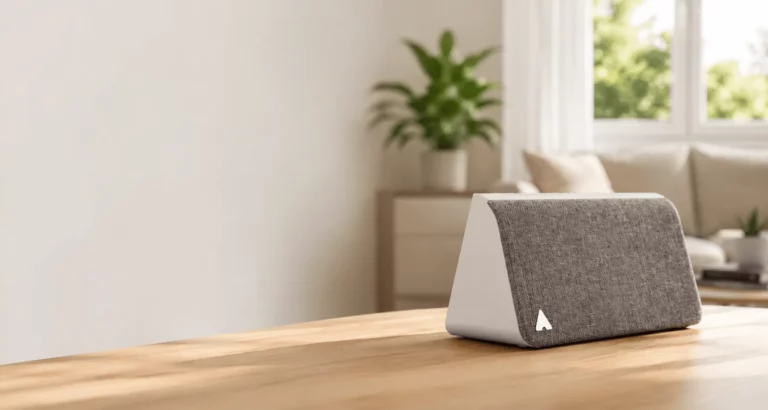
KEVIN® works exactly where burglars decide: on the question of whether anyone is home. The patented presence simulator from Switzerland combines light, sounds and shadows so that your home looks occupied day and night.
- AI sounds without repetition, your own sounds on request
- Works without Wi-Fi and keeps working against jammers
- No camera, no microphone
- FCC and UKCA certified
- Around 9 watts, from $599 (US) / €549 (UK), 3-year warranty
- Over 5,000 protected buildings, no reported burglary since 2019
- 92% recommend KEVIN®, recommended by police and the SKP
11Frequently asked questions
What is the best burglary protection?
The best burglary protection combines three layers: deterrence through realistic presence, delay through good locks on doors and windows, and detection through light, alarms and alert neighbours. Because burglars avoid occupied homes, presence simulation is the most effective first measure.
What deters burglars the most?
The feeling that someone is home. Burglars want to avoid encounters. Light and sounds in changing rooms, motion-sensor lighting outside, alarm systems and alert neighbours are strong deterrents.
Is an alarm system enough?
An alarm system reports a burglary but does not always prevent it. It only reacts once someone is already at or in your home. It works best together with presence simulation and good locks.
Is a timer enough?
Usually not. Timers switch at the same time every day, make no sounds and hardly help in daytime. Burglars who watch a house quickly spot such patterns.
How long does a burglar try to get in?
Only briefly. Police crime prevention advisers point out that many burglars give up if they cannot get in quickly. Doors and windows of resistance class RC2 withstand simple tools for at least three minutes.
When do most burglaries happen?
Often during the day, when people are at work, and at dusk. In the US, 53% of residential burglaries happen in daytime. From November to February it gets dark early, so the risk of dusk burglaries rises.
What should I do if I notice a burglar?
Do not confront him. Get to safety, turn on lights, make noise and call the police immediately: 911 in the US, 999 in the UK, 112 in the EU.
How much does good burglary protection cost?
It depends on where you live. Presence simulation such as KEVIN® costs from $599 (US) / €549 (UK), window locks around $150 to $550 (£120 to £400) per window, alarm systems $1,200 to $24,000 (£900 to £18,000). Start with deterrence and the weakest entry points.
KEVIN® newsletter
Burglary protection tips, new guides and KEVIN® news. Unsubscribe at any time.