
Home security guide (US)
How to make your house look lived in while you're away
Burglars skip homes that look occupied. The trick is to make your house look and sound lived in, not just lit up on a timer. This guide shows what really works, from lights and sound to locks and alarms, what it costs in dollars, and a 10-step checklist for your next vacation or workday.
Key points
They pick the target with the least effort and risk. A house that looks occupied is the biggest risk for them.
Lamps on a timer repeat the same pattern every day and do nothing in daytime. Sound and changing rooms make the difference.
Good deadbolts and secured sliding doors buy time. Most burglars give up if they cannot get in quickly.
A presence simulator, solid locks and outdoor lights deter without a subscription. An alarm adds detection on top.
Burglary in numbers: USA, UK and Europe
residential burglaries in the US in 2024, 8.6% fewer than the year before
of US residential burglaries happen during the day
of burglars would pick another target if they saw an alarm (UNC Charlotte survey)
of burglars decide on the spur of the moment, only 12% plan ahead
| Country | Burglaries of homes | Change on previous year | Source, year |
|---|---|---|---|
| USA | 405,776 | -8.6% | FBI, 2024 |
| United Kingdom (England and Wales) | ≈ 327,000 | -22.0% | ONS, 2025 |
| European Union | 721,876 | -0.5% | Eurostat, 2024 |
| Germany | 82,290 | +5.7% | BKA PKS 2025, 2025 |
| France | 211,600 | -3.0% | SSMSI, 2025 |
| Spain | 74,353 | -8.3% | Ministerio del Interior, 2025 |
| Italy | ≈ 249 per 100,000 inhabitants | -8.7% | Viminale / Il Sole 24 Ore, 2025 |
| Netherlands | 21,567 | -3.6% | Politie, 2025 |
| Switzerland | 34,755 | +5.1% | BFS / TCS, 2025 |
Countries count differently: the UK figure is an estimate from the Crime Survey, France includes attempts, Switzerland counts burglaries only (46,636 including sneak-in thefts), and the US change refers to all burglaries. The figures are therefore only partly comparable.
1Why burglars avoid homes that look occupied
Most burglars are not professional thieves. They follow a simple calculation: as little effort, as little risk and as quick a reward as possible. In a survey of 422 incarcerated burglars by the University of North Carolina at Charlotte, only 12% said they usually planned their burglaries in advance. 41% decided on the spur of the moment.
That is why the first question for a burglar is: is anyone home? Many knock or ring the doorbell first, watch windows, the mailbox and the driveway, or come during the day. In the US, 53% of residential burglaries happen in daytime, when people are at work or school. If a house looks and sounds occupied, they move on.
In the same survey, around 60% of burglars said an alarm system would make them look for another target. Noise, light and witnesses are what they fear most.
What gives an empty house away and what makes it look lived in
| Gives it away | Makes it look lived in |
|---|---|
| The same lamp on from 7 to 11 pm every night | Lights changing between rooms at random times |
| Total silence, even during the day | Voices, TV, music and kitchen sounds |
| Blinds shut for a week | Blinds that open and close like on a normal day |
| Packages on the porch, full mailbox | Mail held or picked up by a neighbor |
| Empty driveway, uncut lawn, snow not cleared | A neighbor's car in the driveway, yard taken care of |
| Dark entry points, unlocked sliding door | Motion lights outside, a bar in the sliding door track |
| Vacation photos posted in real time | Share your trip once you are back |
Police crime prevention advisers recommend making your home look occupied when you are away.
See the Swiss Crime Prevention recommendation →
2The plan: deter, delay, detect
No single gadget makes a home safe. The most effective approach combines layers that match how burglars think. If one layer fails, the next one takes over.
Your home looks and sounds occupied, so a burglar never chooses it. This is the cheapest and most effective layer, because the break-in never starts.
Deadbolts, strike plates and secured sliding doors hold out. Every minute raises the risk for the burglar.
Motion lights, a siren, a phone alert and neighbors who take a look if someone still tries.
Valuables in a safe, an inventory with photos and the right insurance, so little can be taken and much can be replaced.
The order matters. An alarm only reacts once someone is already at your door or inside. Convincing presence simulation makes sure they never come.
3Make it look and sound lived in
Because burglars avoid encounters at all costs, looking occupied is the strongest deterrent. But it has to be convincing. Burglars often watch a street for days, and a lamp on the same timer every evening is easy to spot.
Realistic means light and sound together, in different rooms, at different times, and during the day too. A flickering TV glow helps in the evening, but in daytime only sound works: voices, footsteps, a TV, dishes. That is the gap that smart plugs and fake TV lights leave open.
- Combine light and sound: a home should sound lived in, not just look lit.
- Randomize: avoid fixed times that repeat every day.
- Cover daytime: most US burglaries happen during the day.
- Hold your mail: use USPS Informed Delivery or a hold, and ask a neighbor to grab packages.
- Keep up the outside: lawn mowed, snow shoveled, trash cans brought in, a car in the driveway if possible.
- Watch the dark months: after daylight saving time ends it gets dark around 5 pm, a classic time for break-ins.
Read more in our presence simulation guide and our burglary protection strategy.
4Locks and doors: slow them down
If someone still tries, they should lose time. Most burglars use simple tools and go through the front door, a back door or a sliding patio door, often by kicking or prying.
Simple upgrades make a big difference: a Grade 1 deadbolt (ANSI/BHMA), a reinforced strike plate with 3-inch screws, and a security bar or pin for sliding doors.
- Grade 1 deadbolts on all exterior doors, including the door from the garage
- Reinforced strike plates with 3-inch screws that reach the wall stud
- A bar or pin in the sliding door track, anti-lift blocks at the top
- Window locks, especially on ground-floor and basement windows
- Garage door locked, opener remote not left in the car
- Ladders and tools stored away so nobody climbs to the second floor
5If someone still tries: detect and respond
If someone still wants to get in, they should be noticed as quickly as possible. Burglars fear noise, light and witnesses.
Light up the driveway, back yard and side doors and take away the burglar's cover.
Noise is the strongest signal to leave. Monitored alarms usually come with a monthly fee.
Deter and help with evidence. Keep cameras outside, your home inside stays private.
A neighbor who knows you are away is the cheapest alarm. Neighborhood apps help too.
Presence simulation, alarm and lights can work together, for example via Home Assistant.
Important: if you notice a burglar at home, do not confront them. Get to safety, turn on lights, make noise and call 911.
6Limit the damage
Even the best protection cannot prevent every break-in. Then what counts is how little the burglar finds and how quickly you recover.
- Keep jewelry, cash, passports and documents in a bolted-down safe or a bank deposit box
- Photograph valuables, record serial numbers and keep receipts
- Check your homeowners or renters insurance, including rules for longer absences
- After a break-in, do not go inside, call 911, touch nothing and freeze your cards
7The right setup for every situation
Presence simulation for the whole trip, mail on hold, a neighbor checking in, posts only after you are back.
Many break-ins happen during working hours. Sounds and occasional light keep your home looking occupied while you are at work.
It gets dark early. Light and sound from dusk avoid the typical dark house at 5 pm.
Focus on the front door: deadbolt, door viewer and presence you can hear through the door.
Secure back and sliding doors, add motion lights and combine them with presence simulation.
Long periods empty are risky. A simulation that works without Wi-Fi protects even where there is no internet.
8Costs in dollars compared
The cheapest measure is often the most effective: a break-in that never starts causes no damage. Typical US prices:
| Measure | Typical cost | Mainly |
|---|---|---|
| KEVIN® presence simulator | $599, no monthly fee | Deters, day and night |
| Smart plugs or timers | $10 to $25 each | Light only, little in daytime |
| Fake TV light | $25 to $40 | Evening only, no sound |
| Grade 1 deadbolt and strike plate | $40 to $150 per door | Delays |
| Motion-sensor outdoor light | $35 to $170 | Deters, detects |
| Video doorbell | $60 to $250, often plus $4 to $20 a month | Detects |
| Monitored alarm system | $200 to $1,500 plus $20 to $60 a month | Detects, responds |
| Bolted-down safe | $230 to $2,300 | Limits damage |
Guide prices, as of November 2026, excluding installation. Prices vary by brand and provider.
Our advice: start with deterrence, secure the weakest doors, then add motion lights and, if you want, an alarm.
9Checklist: 10 steps before you leave
Before your next trip, or simply before you leave for work:
- Set up presence simulation with light and sound, including daytime
- Avoid fixed timer patterns that repeat every day
- Lock all doors, including the garage and the door from the garage
- Put a bar in the sliding door track
- Close and lock windows, especially on the ground floor
- Turn on motion lights at the entrances
- Put your mail on hold and ask a neighbor to pick up packages
- Keep the yard and driveway looking used
- Do not post vacation photos until you are back
- Store valuables in a safe and document them
10KEVIN®: presence simulation without monthly fees
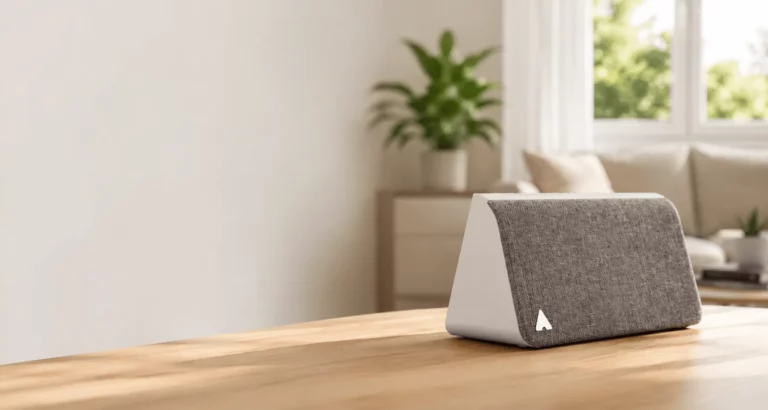
KEVIN® works exactly where burglars decide: on the question of whether anyone is home. The patented presence simulator from Switzerland combines light, sounds and shadows so your home looks and sounds occupied, day and night, without a monthly fee.
- AI sounds without repetition, your own sounds on request
- Works without Wi-Fi and keeps working against jammers
- No camera, no microphone
- FCC and UKCA certified
- $599 in the US, around 9 watts, 3-year warranty
- Over 5,000 protected buildings, no reported burglary since 2019
11Frequently asked questions
How do I make my house look lived in while on vacation?
Combine light and sound in different rooms at changing times, also during the day. Hold your mail, have a neighbor pick up packages, keep the yard looking used and do not post vacation photos until you are back. A presence simulator like KEVIN® automates the light and sound part.
Do lights on timers deter burglars?
A little, but timers repeat the same pattern every day and do nothing in daytime. Burglars who watch a house quickly notice it. Randomized light combined with sound is much more convincing.
Do fake TV lights work?
They help in the evening because they imitate the flicker of a TV. They make no sound and are useless during the day, when most US burglaries happen.
Should I leave a TV or radio on when I'm away?
Sound is a strong signal that someone is home. A radio playing all day in one spot is less convincing than changing everyday sounds in different rooms, which a presence simulator can provide.
What time do most burglaries happen?
In the US, 53% of residential burglaries happen during the day, when people are at work or school. In winter, early darkness adds risk in the late afternoon.
Can I protect my home without monthly fees?
Yes. A presence simulator, Grade 1 deadbolts, a sliding door bar and motion lights deter and delay burglars without a subscription. A monitored alarm adds detection, usually for $20 to $60 a month.
Is KEVIN® available in the US?
Yes. KEVIN® is FCC certified and available in the US for $599, with no monthly fee. The basic app is always free.
What should I do if I come home to a break-in?
Do not go inside, the burglar may still be there. Call 911 from a safe place, touch nothing, then document the damage and contact your insurance.
KEVIN® newsletter
Burglary protection tips, new guides and KEVIN® news. Unsubscribe at any time.